Ink on Blades – the Making of an Olympic Skate Program: The Search for Two Perfect Music Tracks
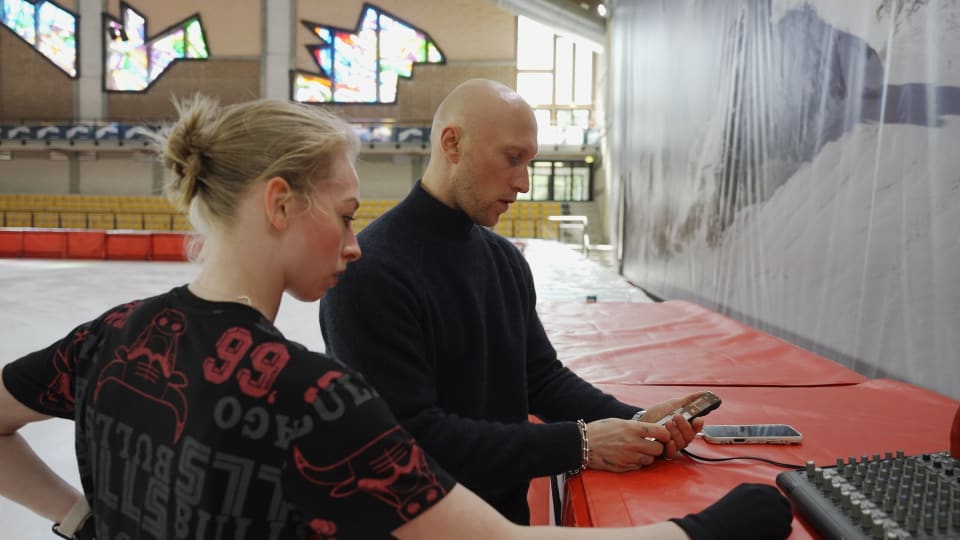
If you had to introduce yourself to the world with two songs, which would you pick? Before the jumps, spins, and step sequences, figure skaters face a crucial challenge: selecting the music for their programs. The parameters are stringent—one piece must be under three minutes, while the other stretches to four minutes. Benoît Richaud, a French choreographer, meets this challenge enthusiastically with two playlists totaling 3,000 tracks, carefully curated for figure skating.
Richaud sees the extensive list not as overwhelming but as a creative canvas. “I see something that the skater cannot see. That’s why I propose the music,” he stated, emphasizing the importance of experimentation on the ice. His unique approach taps into his deep emotional connection with music. “Music speaks to me so deeply that it just touches me,” he added.
After retiring from competitive skating, Richaud pursued a music career but ultimately returned to choreography, where his ardor for music flourishes. “I just go and do,” he said when discussing his unstructured creative process.
In recent programs, Richaud’s choices have hit the mark. Adam Siao Him Fa’s program is a powerful example; skating to Philip Glass’ “Tirol Concerto for Piano and Orchestra,” the music ignited a collaborative improvisatory session that shaped the choreography.
For others like Donovan Carrillo, music selection often serves as a personal connection. Carrillo has held onto “My Way” for a significant moment, aligning the piece with his family’s support. Cheerfully, he noted how it reminds him of enjoying skating for his loved ones.
The connection between music and emotion in figure skating is also evident in Bradie Tennell’s returning to “The Mission” as her career transitions. “It’s like a bookend on my career,” she says, illustrating the profound impact of music choice.
Other skaters, however, have a different journey. Minerva Fabienne Hase was hesitant at first when presented with music selections. “It feels really nice, really strong—it’s just a perfect match,” Hase reflected, illustrating how choices develop an emotional resonance.
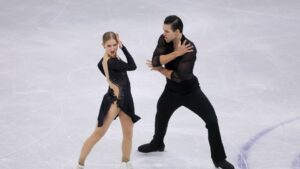
In the world of ice dance, Vadym Kolesnik championed R&B and hip-hop tracks, pushing the boundaries of traditional music styles. “I was the one who picked it,” he shared, underscoring the importance of music in shaping innovative programs.
As figure skating evolves, music remains at the heart of every skater’s expression—a vital element in their journey towards Olympic glory.